Budget · 6 min
A KRW 1,500,000 travel budget worksheet with fixed costs and daily limits
This fictional three-day example subtracts KRW 900,000 in fixed costs, protects a KRW 150,000 reserve, and allocates the remaining KRW 450,000 by day.
TripNotePlan Development and Operations Team
Published · Updated
How this guide was made
- We built a reusable worksheet that separates prepaid fixed costs, daily variable costs, and a contingency reserve.
- Every amount is fictional and is included to demonstrate the calculation, not to claim an average travel price.
Verification evidence
- Test case
budget-krw-3d-v1- Platform
- Web /app
- Tested
- Build reference
9563001- Source record language
- Korean
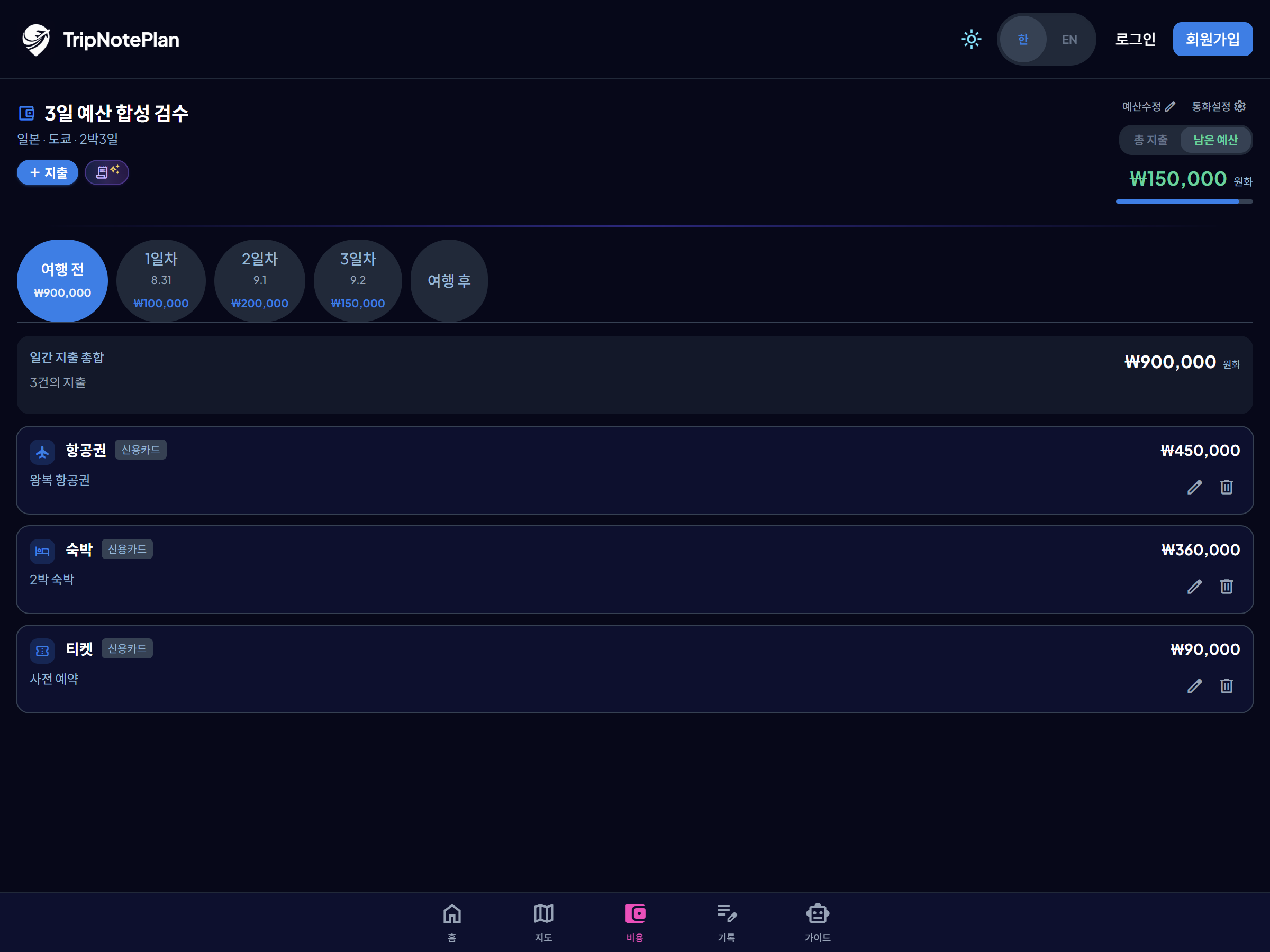
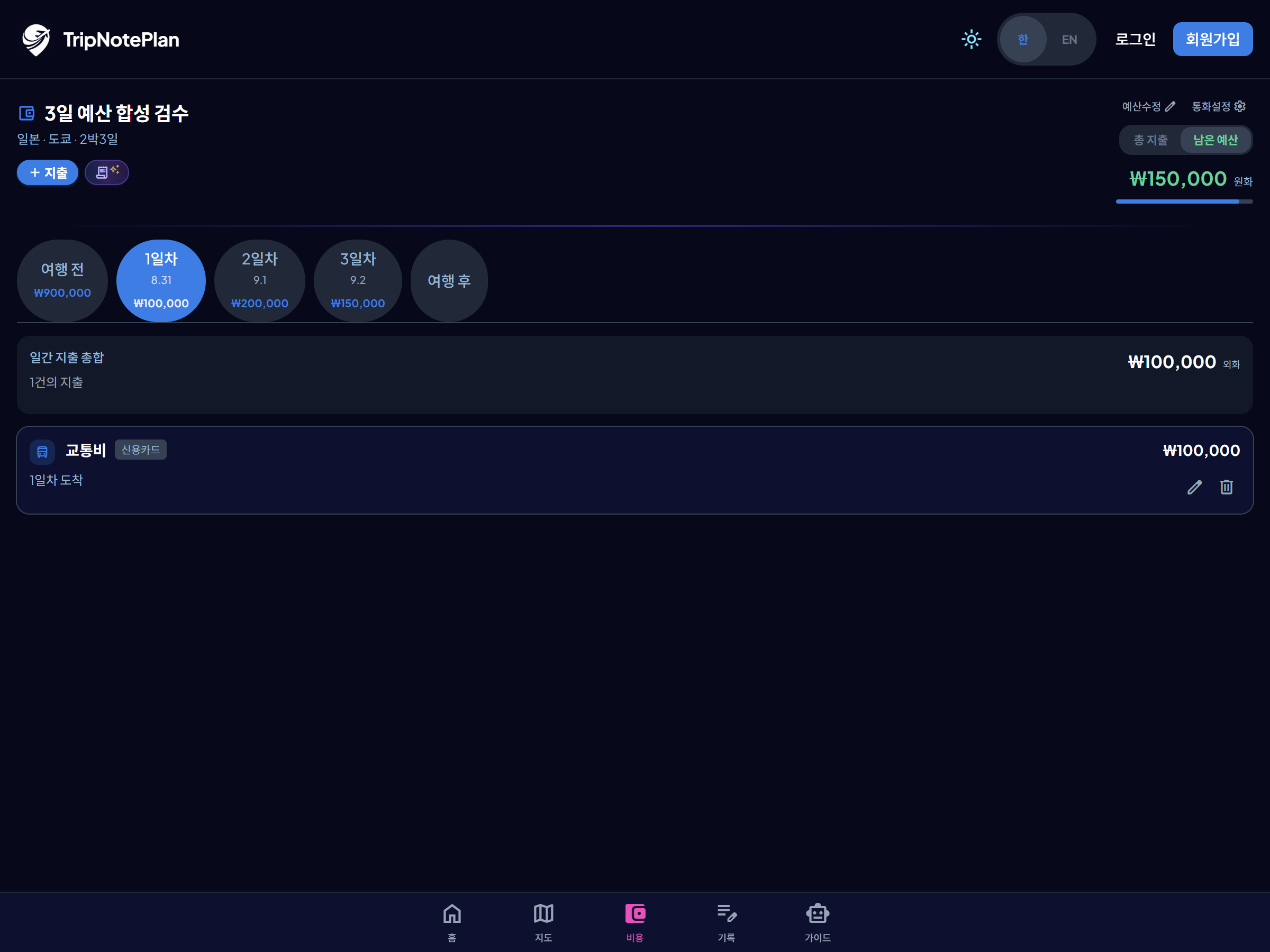
On 2026-08-31, we entered a fictional three-day KRW budget in web /app at Step 2 checkpoint 9563001 and checked the total and daily allocation. These amounts are calculation examples, not market averages, user spending, or live exchange rates.
Screen records
Downloadable audit files
-
Fictional costs JSON · JSON
Fictional total, fixed costs, reserve, and daily spending inputs
-
Calculation audit CSV · CSV
Recalculation of fixed-cost subtraction and three-day spending allocation
A total budget does not answer how much is available on each travel day. This fictional example uses KRW 1,500,000 for a three-day trip, with KRW 900,000 in fixed costs and a KRW 150,000 reserve separated before daily spending is allocated. It is a calculation example, not user spending or a destination price quote.
Step 1: subtract costs that are already committed
Flights, accommodation, and prepaid tickets belong in the fixed-cost section when you have a real booking amount. Meals, local transport, and optional activities stay in the daily pool because they can still change.
The fictional example assigns KRW 450,000 to flights, KRW 360,000 to accommodation, and KRW 90,000 to prepaid tickets. Replace every row with an actual confirmation before using the result as a spending limit.
| Category | Amount | Replace with |
|---|---|---|
| Flight | KRW 450,000 | Confirmed ticket total |
| Accommodation | KRW 360,000 | Taxes and pay-at-property amounts included |
| Prepaid tickets | KRW 90,000 | Confirmed rail or attraction bookings |
| Fixed-cost total | KRW 900,000 | Sum of committed costs |
Step 2: protect a reserve before setting daily limits
After fixed costs, KRW 600,000 remains. This example moves KRW 150,000 into a contingency reserve for disrupted transport, luggage, or an unplanned essential expense. The amount available for ordinary daily spending becomes KRW 450,000.
The formula is “daily pool = total budget - fixed costs - reserve.” Keeping the reserve separate prevents one disruption from being hidden inside food or activity spending.
| Calculation | Formula | Result |
|---|---|---|
| After fixed costs | 1,500,000 - 900,000 | KRW 600,000 |
| After reserve | 600,000 - 150,000 | KRW 450,000 daily pool |
| Equal reference | 450,000 ÷ 3 days | KRW 150,000 per day |
Step 3: allocate by the shape of the itinerary
Equal daily limits are only a reference. Arrival and departure days may be lighter, while a full sightseeing day can need more local transport and paid activities.
The allocation below still totals KRW 450,000: KRW 100,000 on arrival, KRW 200,000 on the main sightseeing day, and KRW 150,000 on departure. TripNotePlan can record expenses by trip day so the planned limit and actual spending remain in the same context.
| Day | Limit | Planning assumption |
|---|---|---|
| Day 1 · arrival | KRW 100,000 | Airport transfer and dinner |
| Day 2 · main itinerary | KRW 200,000 | Transport, meals, paid activity |
| Day 3 · departure | KRW 150,000 | Meals and airport transfer |
| Total | KRW 450,000 | KRW 150,000 reserve remains separate |
Handle foreign currency without pretending the rate is fixed
Choose one planning rate so the worksheet has a consistent base currency, and write down the date you checked it. Keep the original local-currency amount for every expense.
A card can be posted at a different exchange rate and include foreign transaction fees. Update the final record with the actual statement amount instead of treating the planning conversion as the settled cost.
Action checklist
- Use confirmed bookings, not destination averages, for fixed costs.
- Move the contingency reserve out before dividing the daily pool.
- Allocate more to activity-heavy days and less to travel days.
- Keep local-currency amounts separate from final card charges.
Sources checked
- Bank of Korea Economic Statistics System (checked )